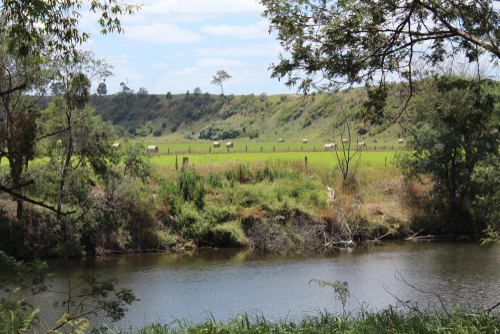
The situation
A farmer plans to control invasive weeds along a narrow area next to a waterway in the Great Barrier Reef catchment.
These weeds are declared under state biosecurity laws, which means landholders must manage them. The surrounding area contains native vegetation that can benefit when weeds are removed.
Proposed activity
The farmer will:
- use targeted chemical spraying to control invasive weeds
- limit spraying to the affected area
- use selective herbicides and low-drift methods to avoid off-target impacts
- set up buffer zones and avoid spraying in poor weather
- take steps to prevent runoff into the waterway.
Key considerations
- The farmer is required under state law to manage declared weeds.
- Weed control is a routine activity, but EPBC Act rules still apply if Matters of National Environmental Significance (MNES) are present.
- Impacts may occur if spraying affects nearby native vegetation, species habitat, or the waterway.
- Risks include spray drift, chemical runoff, and damage to riparian vegetation.
- Careful use of herbicides, buffer zones and timing can reduce these risks.
Outcome
An EPBC Act referral is likely not required, if:
- a self-assessment shows no MNES are present in or near the treatment area
- spraying avoids runoff, spray drift and impacts on the waterway.
If MNES are present, and spraying may affect them through drift, runoff or habitat damage, a referral may be required.
When carried out carefully and without impacts on MNES, weed control is considered routine land management.