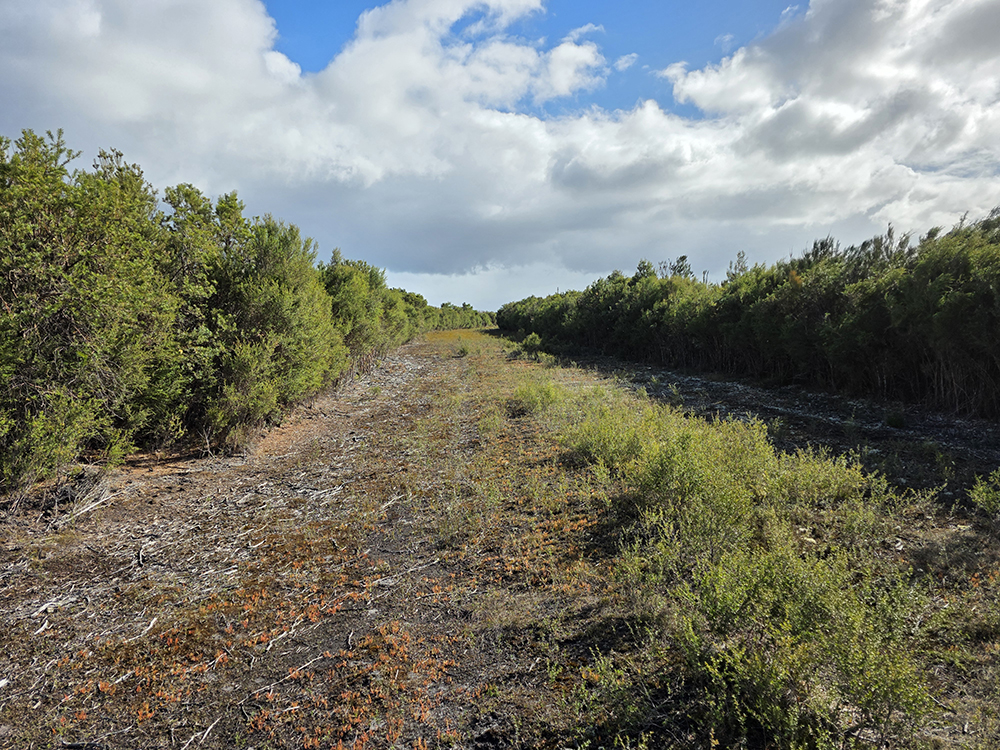
Scenario
A cattle producer in south-west Queensland plans to expand fodder harvesting to support more grazing. The proposal includes large-scale mechanical lopping and clearing of 2,000 hectares of mulga woodland, including Category B regrowth.
Site details
- Bioregion: Mulga Lands
- Vegetation: Mature mulga and dense regrowth
- Mapped habitat for the greater bilby
- Mapped habitat for the kowari
- Claypans present, used by migratory species after rain
- Signs of threatened species found on site
- Harvesting planned across multiple paddocks, including areas not previously harvested
- Past harvesting was small-scale, but this is a large expansion
Activity
The producer plans to:
- use machinery to lop and push over large areas of mulga across 2,000 hectares
- harvest beyond strip-harvesting limits
- repeat harvesting more often than allowed under the Queensland code
- clear mulga in long strips to create grazing corridors
- work close to claypans and drainage lines.
The activity is outside the scope of routine fodder harvesting under the Queensland code.
EPBC considerations
- Large areas of mulga would be removed.
- The vegetation may form part of a listed ecological community.
- The activity is not small-scale, cyclical or easily reversed.
- Claypans may support migratory species at certain times.
- There is a high risk of impacts on Matters of National Environmental Significance (MNES), including threatened species.
Outcome
A referral under the EPBC Act is required.
The scale, intensity and location of the activity mean it is likely to have a significant impact on MNES. A detailed self-assessment and referral are needed before the activity can proceed.