The Environment Protection (Sea Dumping) Act 1981 (Sea Dumping Act) regulates the disposal of carbon dioxide (CO2) by carbon capture and sequestration (CCS) at sea.
What is offshore CCS
Offshore CCS can potentially reduce emissions from hard-to-abate industrial sectors. CO2 is separated from other gases during industrial processes and compressed. A suitable CO2 stream may then be stored in sub-seabed geological formations.
Sea dumping permits
You need a sea dumping permit if you want to dispose of CO2 by CCS in Australian waters.
The Minister (or delegate) must be satisfied that the material meets the criteria to grant a sea dumping permit.
Criteria are listed in the 1996 Protocol to the Convention on the Prevention of Marine Pollution by Dumping of Wastes and Other Matter, 1972 (the London Protocol). This includes the composition of a CO2 stream and any contaminants.
Permits ensure that:
- CO2 streams are loaded, transported, and sequestered at appropriate offshore sites
- we manage the risk of negative impacts to the marine environment and human health.
When you apply for a sea dumping permit, you will need to propose, and justify, its duration. Timeframes must be sufficient to undertake the long-term monitoring that must occur during and after the disposal of the CO2.
Other legal requirements
Offshore greenhouse gas (GHG) storage in Australian waters is also regulated under:
You may also need to refer your project under Australia’s national environment law, the Environment Protection and Biodiversity Conservation Act 1999 (EPBC Act).
You should engage with all relevant regulators early and keep doing so. Discussions will cover consistency, timing and your regulatory obligations. We are happy to participate in joint meetings with other regulators to discuss your activity.
The Australian Government has produced high-level guidance on Offshore Carbon Capture and Storage Regulatory Approvals. This will help you navigate permitting and approvals in Commonwealth waters.
More information on regulating offshore GHG storage and regulatory responsibilities in Commonwealth waters is available through:
CCS activities that may need a sea dumping permit
For permit applications under the Sea Dumping Act, the Environment Minister will consider:
- the specific circumstances of the project
- whether the sequestration of CO2 in Australian waters constitutes sea dumping (under the London Protocol and the Sea Dumping Act).
Depending on the proposed activity, you may require:
- more than one permit
- multiple permits, if additional sources of CO2 are added later.
Scenarios
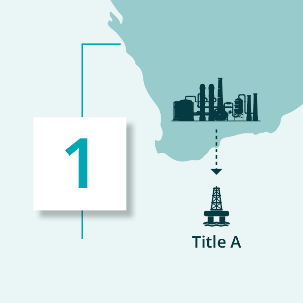
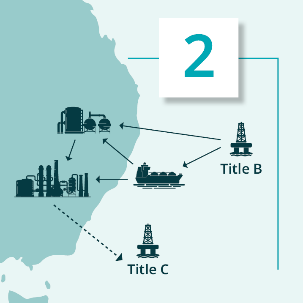
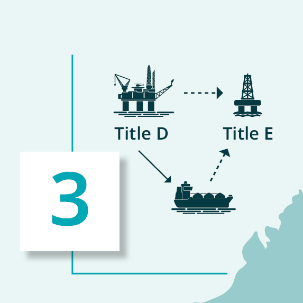
These scenarios can help determine if an intended offshore CCS activity requires a sea dumping permit. This diagram applies only to activities in Australian waters.
Scenario one
CO2 captured onshore is processed. It is then loaded, transported, and sequestered in an offshore greenhouse gas title (Title A).
Scenario 2
CO2 is captured from an offshore petroleum title (Title B). It is then brought back onshore for storage and/or processing. Then it is loaded, transported and sequestered in an offshore greenhouse gas title (Title C).
Scenario 3
CO2 captured from an offshore petroleum title (Title D). It is processed, loaded and transported directly to a different offshore title for sequestration (Title E).
Note: The Offshore Petroleum and Greenhouse Gas Storage Act 2006 (OPGGS Act) and associated regulations provides for the exploration and exploitation of petroleum and greenhouse gas (GHG) in Commonwealth waters.
The OPGGS Act also establishes a title system for the assessment, injection, and storage of GHG. This is administered by the National Offshore Petroleum Titles Administrator. An offshore GHG title grants the titleholder the right to explore, appraise, inject and store CO2. An offshore petroleum title grants the title holder the right to explore and produce oil and or gas.
More information about sea dumping in Australian waters is available at Sea dumping.
If you need help to decide whether your offshore CCS activity needs a sea dumping permit, email seadumping@dcceew.gov.au.
Offshore CCS National Action List
A National Action List is required to meet our obligations under the London Protocol.
We are working with the Commonwealth Scientific and Industrial Research Organisation to develop it. This will allow us to regulate offshore CCS projects in Australia effectively.
The list:
- is a screening tool to assess suitability for the disposal of CO2 into sub-seabed geological formations
- outlines acceptable incidental associated substances and upper levels
- helps assess any potential effects on the marine environment and human health.
Read Interim National Action List for offshore carbon dioxide sequestration.
Our offshore CCS permit application form incorporates feedback received during consultation. The form is consistent with Australia’s international obligations under the London Protocol.
It reflects criteria from:
Application assessment and timeframes
The department assesses your application against the requirements of the Sea Dumping Act and the London Protocol. Read more at Assessing your application.
You should consider the schedule for your construction and injection during project planning. Injection of CO2 cannot proceed until a permit is granted.
Waste management
Your application must include a discussion of other appropriate ways to reuse, recycle, or treat the waste. The London Protocol requires that environmentally preferable alternatives are favoured over sea dumping.
First consider reducing greenhouse gas emissions in ways other than injecting CO2 into the sub-seabed. You must provide information on this in your application. More information is in paragraphs 3.3 and 3.4 of the 2012 Specific Guidelines for the Assessment of Carbon Dioxide for Disposal into Sub-Seabed Geological Formations.
Injection plans
Your injection plans must be robust. The design and construction of the injection well must be considered. This includes:
- cementing
- long-term integrity
- peak pressure
- volume
- temperature.
If you are planning to use an existing or abandoned well, its history is also important.
Section 5.2 of the application form provides further information on injection plan requirements.
Information regarding CO2 well integrity is in the 2006 Risk assessment and management framework for CO2 sequestration in sub-seabed geological structures. This includes information on:
- site selection
- site characterisation
- potential operational releases
- exposure.
More information can be found in sections 1, 3 and Appendix 1 of the Risk assessment and management framework.
Overwhelmingly consisting of CO2
CO2 streams may only be considered for dumping if they consist overwhelmingly of CO2 (Annex 1, paragraph 4, London Protocol). They may contain other substances derived from the source material and the capture and sequestration processes.
ISO 27914:2019 (Carbon dioxide capture, transportation, and geological storage) outlines the accepted interpretation of a CO2 stream. That is, ‘it is overwhelmingly consisting of CO2'. This is defined as containing a concentration of CO2 greater than 95% per mol %.
Permit conditions
If you are granted a sea dumping permit, you become a permit holder. Your permit will include conditions, for example:
- provide the exact coordinates of the offshore CO2 injection sites
- specifications and standards for wellbore construction
- the types of CO2 stream monitoring and loading equipment (used to verify CO2 stream composition and monitor injection rates, plume migration, leakages, and subsidence)
- ongoing monitoring and management of the offshore CO2 project, including the submission of periodic reports to the department or other specified agencies
- requirements for the plug and abandonment of the injection well
- the removal of the project’s infrastructure when the permit expires.
The permit holder must comply with the conditions of the permit.
Where appropriate, we aim to align sea dumping permit conditions with EPBC Act approval conditions. High-level guidance can assist you to manage regulatory requirements and timings for your offshore CCS project.
Adding a new CO2 stream to an existing permit
We are aware that offshore CCS projects can be delivered through a variety of business models. These could include a hub and/or cluster network model. CO2 streams may share transportation infrastructure in these models.
We are currently investigating available mechanisms for how the Sea Dumping Act may facilitate different types of offshore CCS projects.
Varying a granted permit
A permit holder may apply to the Minister (or delegate) to vary the operation of a permit.
Varying an existing permit is at the discretion of the Minister.
An example of an acceptable permit variation could be a minor change, such as a small increase in time for the granted permit.
You cannot vary a sea dumping permit to change the permit holder’s details or transfer a granted permit to a new permit holder.
Export of CO2 for offshore sequestration and offshore sequestration of imported CO2
Australia accepted the 2009 amendment to the London Protocol and declared it’s provisional application on November 7, 2024. This allows CO2 to be exported for offshore disposal outside of Australia. It will also allow imported CO2 to be sequestered offshore Australia.
For both scenarios, we must see evidence of an agreement or arrangement with the other country before we accept a sea dumping application. This is required to satisfy Australia’s obligations under the London Protocol.
In both cases, contact the sea dumping section at seadumping@dcceew.gov.au to discuss your CCS project.
Read more
Learn more about sea dumping and the London Protocol in Australia.
Contact us
Email: seadumping@dcceew.gov.au